
Biotech Video Production in Boston: What Life Sciences Teams Should Look For
If your team is evaluating a video partner for a product launch, investor update, clinical milestone, or medical conference, this isn’t a typical corporate video project — here’s how to choose a partner that understands the stakes.

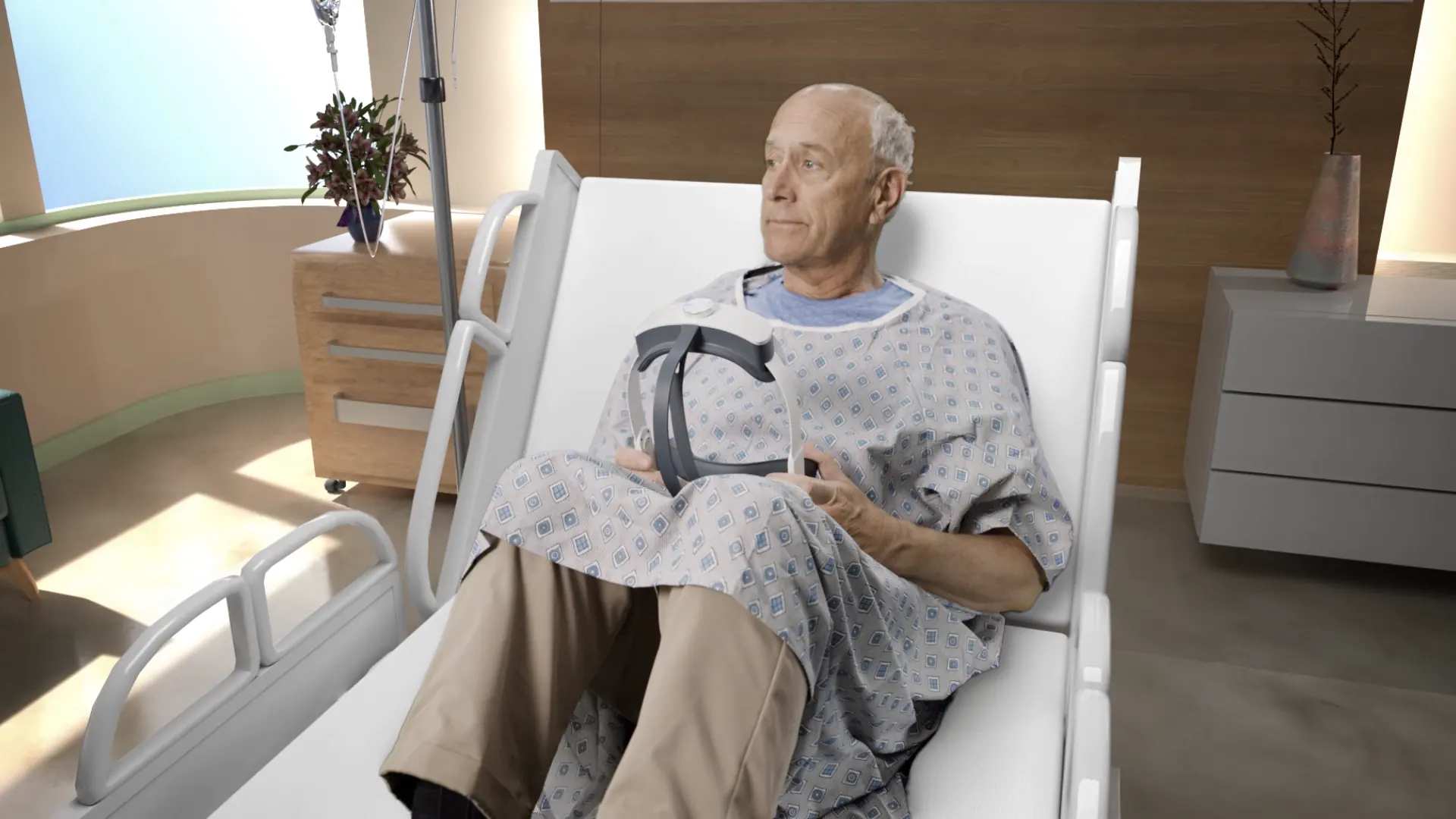
Look for a Boston-area video production company with direct experience in life sciences, healthcare, or investor-facing corporate communications. The right partner can handle scientific accuracy, multi-stakeholder review cycles, executive and subject-matter-expert interviews, and live event streaming — all under one roof.
- Prioritize a partner with real biotech, pharma, healthcare, or investor-relations work — ask for specific examples.
- Confirm what is in-house versus subcontracted: studio, post-production, and live streaming.
- Make sure they understand scientific accuracy and compliance-driven, multi-stakeholder review.
- Look for real SME and executive interview experience, including teleprompter and on-camera coaching.
- Plan one shoot day to generate multiple assets — a flagship video, social cuts, and stills.
This guide walks through everything your team needs before signing a contract: the questions to ask a prospective partner, the formats life sciences teams typically produce, and how to structure a shoot day for maximum efficiency.
01 — The stakesWhy biotech video production is different
Most video production companies can shoot a polished talking-head interview or a product demo. Far fewer are equipped to handle what life sciences video actually requires.
The complexity runs deeper than aesthetics
Biotech and pharma communications carry unique constraints that a generalist production team may not anticipate:
- Scientific accuracy. Every claim on screen — spoken by a scientist or shown as a graphic — may need to hold up to regulatory, legal, and medical review. A crew that doesn’t understand this will cost you time in post-production revisions.
- Compliance-sensitive messaging. FDA guidance, IRB considerations, and investor disclosure rules all affect what can and cannot be said on camera. Your partner needs to understand why language gets flagged, not just accept edits without context.
- Multi-stakeholder review cycles. A typical biotech video may pass through scientific affairs, legal, marketing, and executive leadership before final approval. Timelines need to account for this from day one.
- Subject-matter expert (SME) interviews. Your principal investigators, CMOs, and CSOs are not professional on-camera talent. A skilled team knows how to prepare SMEs, use teleprompters effectively, and create an environment that draws out credible, natural performances.
- Visual representation of science. Motion graphics, data visualizations, and animated sequences that accurately represent mechanisms of action, clinical-trial data, or device functionality require writers and designers who can translate complex science into clear visuals.
Boston and Cambridge are a unique production environment
Greater Boston is home to one of the densest concentrations of biotech and life sciences companies in the world. Kendall Square alone houses dozens of major pharma and biotech organizations. A local production company that regularly works in this ecosystem understands the pace, the stakeholders, and the particular demands of the market in a way an out-of-region generalist simply won’t.
02 — The formatsTypes of video life sciences teams typically produce
Understanding the full range of formats your organization might need helps you judge whether a partner can grow with you over time, rather than just executing a single project.
Corporate and investor communications
| Project type | Primary audience | Key production considerations |
|---|---|---|
| Investor update / earnings video | Shareholders, analysts | Compliance review, executive coaching, teleprompter |
| Clinical milestone announcement | Investors, media, partners | Speed to publish, accurate data representation |
| Pipeline overview video | Institutional investors, board | Motion graphics for pipeline visualization |
| Executive thought leadership | Industry peers, media | Interview-style, natural delivery, branded backdrop |
Scientific and clinical content
- Mechanism-of-action (MOA) animations. 2D or 3D sequences illustrating how a drug, device, or therapy works at the cellular or molecular level.
- Clinical trial explainers. Videos that walk patients, providers, or investigators through trial protocols in plain language.
- Patient education content. Accessible, empathetic video that helps patients understand a diagnosis, treatment, or device without overwhelming them.
- Medical device demonstrations. On-location or studio footage showing how a device is used, often paired with motion graphics for internal components.
Events and live streaming
Many Boston life sciences organizations produce content at major industry conferences such as BIO International, ASCO, the J.P. Morgan Healthcare Conference, and local investor days. Biotech event livestreaming demands more than a camera and an internet connection — it requires redundant streaming infrastructure, professional audio, multi-camera switching, and a crew that can operate in a fast-moving conference environment without disrupting the event itself.
Internal communications
Town halls, training videos, onboarding content, and change-management communications are often overlooked as video opportunities, yet they represent some of the highest-value content a life sciences organization can produce. A well-produced internal video can reach hundreds of employees across multiple sites simultaneously.
03 — The partnerWhat to look for in a life sciences video partner
Not all production companies are equipped for the demands of biotech and pharma communications. Here’s what separates a capable partner from one that creates friction at every stage.
Relevant industry experience
Ask to see work produced for biotech, pharma, healthcare, or medical-device clients. Look specifically for evidence that the team has navigated:
- Scientific content with technical-accuracy requirements
- Executive and SME interview production
- Investor-facing or compliance-reviewed communications
- Live event coverage or conference streaming
A Boston video production company experienced across the life sciences sector will recognize these challenges immediately. One that hasn’t will learn them at your expense.
In-house capabilities vs. subcontracted work
Understand exactly what is handled in-house versus outsourced. Key capabilities to ask about:
- Studio facilities. Does the company operate its own studio, or rent one? A dedicated studio means more scheduling flexibility and a controlled environment for sensitive executive interviews.
- Post-production. Are editing, color grading, motion graphics, and audio mixing done in-house? Fragmented post workflows introduce delays and quality inconsistencies.
- Live streaming infrastructure. For a hybrid event or webcast, does the team own professional streaming equipment, or are they renting and learning on the job?
Communication and project management
High-stakes projects require a clear point of contact, a realistic timeline, and a team that proactively flags issues before they become problems. Ask how they handle scope changes, how review rounds are structured, and what happens when a key executive is unavailable on shoot day.
Local knowledge and logistics
Filming inside a biotech facility in Kendall Square or on a hospital campus in the Longwood Medical Area involves access protocols, safety requirements, and scheduling constraints a local team will have navigated before — saving your team significant coordination time.
Key considerationThe best production partners for life sciences work aren’t just technically skilled. They understand that your video is a communications asset with real business stakes, and they approach the project accordingly.
04 — The formatStudio, on-location, or live event: choosing the right one
The right format depends on the content, the audience, and the distribution channel. Here’s a practical breakdown.
Studio production
Studio production is the right choice when you need:
- Controlled visual quality. A professional studio eliminates the lighting, noise, and ambient variables that affect on-location shoots.
- Executive interviews. For investor updates, thought leadership, or spokesperson content, a studio allows teleprompter support, professional lighting, and multiple angles without field-shoot logistics.
- Repeatable branded content. For a series — a quarterly investor update or an ongoing patient-education series — a consistent studio setup creates visual continuity across episodes.
Charles River Media operates a dedicated studio in the Boston area, giving life sciences clients a reliable, bookable environment for high-stakes interview production without the overhead of sourcing and scouting a rental space.
On-location filming
On-location production makes sense when:
- The environment itself tells part of the story — a lab, a manufacturing floor, a clinical setting
- You need b-roll that establishes credibility and authenticity
- You’re documenting a real-world moment — a device in use, a facility tour, a patient interaction
On-location medical video requires advance planning around access permissions, infection-control protocols, and patient privacy. A team experienced in healthcare and biotech environments arrives with that checklist already completed.
Live event and hybrid production
Biotech event livestreaming is a distinct discipline. Whether it’s a live investor day, a medical-conference keynote, a product-launch webcast, or an internal all-hands, live production requires:
- Redundant internet connections and streaming hardware
- Professional multi-camera switching
- Real-time graphics and lower-third overlays
- Experienced technical directors who can manage the unexpected
The hybrid model — an in-person event broadcast simultaneously to a remote audience — has become standard across the life sciences sector. Getting it right requires a team that has done it many times, not one figuring it out at your event.
05 — The shortlistQuestions to ask before hiring a biotech video company
Before committing to a partner, these questions surface the information that matters most for life sciences work.
- Have you produced video for biotech, pharma, or healthcare clients? Ask for specific examples, not a general yes. The portfolio should show work resembling your project in complexity and audience.
- How do you handle compliance review and revision cycles? A good answer describes a structured process: a defined number of review rounds, a clear revision-intake workflow, and a timeline that builds in legal or regulatory review.
- Do you have in-house teleprompter support? For executive and spokesperson content, teleprompter operation is a specialized skill — the operator needs to pace the scroll to the speaker and adjust in real time.
- What is your post-production workflow for scientific content? Ask specifically about motion graphics, data visualization, and how scientific accuracy gets signed off on animated sequences.
- Can you handle live streaming, and what redundancies do you have? For any live event, ask about backup internet, hardware redundancy, and what happens if a primary system fails mid-stream.
- Who is the day-of point of contact, and what is your escalation process? On high-stakes shoot days you need to know exactly who to call — and that person should be on-site, not reachable by email.
06 — The prepHow to prepare your team before the shoot
Production day goes smoothly when preparation happens well before the crew arrives. Here’s what life sciences marketing teams can do on their end to maximize the investment.
Align internally before the creative brief
The single most common source of production delays is internal misalignment discovered after the shoot. Before you brief a production company, make sure your team agrees on:
- The primary audience for each video (investors vs. patients vs. clinicians vs. employees)
- The key message — one sentence every stakeholder can agree on
- Who has final approval authority, and how many review rounds are realistic
- Whether legal or regulatory review is required, and at what stage
Prepare your on-camera talent
Scientists, executives, and clinical staff are subject-matter experts, not trained presenters. A few things make a significant difference:
- Script or talking-points review. Send approved messaging to participants at least 48 hours before the shoot. If a teleprompter is being used, schedule a brief rehearsal.
- Wardrobe guidance. Solid colors photograph better than patterns or fine stripes. Avoid bright white, which can blow out under studio lighting.
- Briefing on the day’s schedule. Participants who know when they’re needed, how long they’ll be on camera, and what the setup looks like perform more naturally.
Plan for asset repurposing from the start
One of the highest-leverage decisions you can make before a shoot is planning how a single production day generates multiple assets. A well-structured shoot can yield:
- A 3–5 minute flagship video
- Two to three 60–90 second social cuts
- A series of 15–30 second clips for LinkedIn or paid media
- Still photography from the set for press and website use
- Audio-only versions for internal distribution or podcast use
This planning requires a conversation with your production partner before the shoot, not after. The more intentional the shot list, the more flexibility you have in post-production.
07 — The checklistBiotech video production checklist
Use this checklist when evaluating a partner or preparing for an upcoming project.
Before hiring
- Reviewed their portfolio for life sciences or healthcare work
- Confirmed in-house studio, post-production, and live streaming
- Asked about compliance review and revision-cycle processes
- Verified teleprompter availability and operator experience
- Confirmed local presence and Greater Boston facility experience
- Discussed a timeline with review rounds built in
Before the shoot
- Internal alignment complete: audience, message, approval authority
- On-camera participants briefed; scripts or talking points reviewed
- Legal or regulatory review process confirmed and scheduled
- Shot list reviewed with the team, including a repurposing plan
- Wardrobe guidance sent to all on-camera participants
- Location access, safety, and privacy requirements confirmed
Post-production
- Review-round structure agreed (number of rounds, feedback format)
- Captions and accessibility requirements specified
- Motion graphics and data visualizations checked for accuracy
- Final deliverable formats confirmed (resolution, file type, specs)
- Asset-repurposing cuts identified and scheduled
Frequently asked questions
What makes biotech video production different from standard corporate video?
How long does a biotech video project typically take?
Should we use studio production or film on location at our facility?
What does biotech event livestreaming require?
How do we handle compliance review in the video production process?
Can one shoot produce multiple video assets?

Don Schechter
Don founded Charles River Media in 2004 and has spent two decades producing video, live streaming, and event content for biotech, healthcare, education, investor relations, and corporate clients across Greater Boston. He also teaches media production as a part-time Professor of the Practice at Tufts University.
Planning a life sciences video project?
Charles River Media is a Boston-area video production and live streaming company with deep experience in biotech, healthcare, and investor communications — recognized by Clutch as a top-rated Boston video production company (4.9 / 5). From studio interviews to on-location shoots and hybrid event streaming, the team handles production, post-production, and live events under one roof. If you want to talk through your options before committing to a scope, that’s a good place to start.